

Data in Women's Sports | by Craig Brown
Data and sports go hand in hand, linked at the hip and incredibly important. When I asked ChatGPT how much the fantasy sports industry was worth, it said:
“As of my knowledge cutoff in September 2021, the fantasy sports industry was estimated to be worth $18 billion dollars globally. However, I don't have the most recent data on its current value in 2023. The industry has been growing steadily over the years, driven by increasing participation and the popularity of various fantasy sports leagues. To get the most accurate and up-to-date information on the current worth of the fantasy sports industry, I recommend referring to recent market research reports or reliable sources specialized in sports industry analysis.”
That is an eye-watering amount made from the simple act of people picking players based on a made-up cost and then feverishly watching their performance over a weekend and then pawing over their statistics and data to see how their fantasy team has got on.
Fantasy Football (or Soccer if you are in the US) is big here in the UK, but being a massive fan of women's football, it frustrates me when they aren’t as mainstream as their male counterparts. This got me thinking as to the reason why? Is it due to data? The lack of availability or the lack of data itself in the women's game?


The above, now iconic picture is of Chloe Kelly, England and Manchester City forward, seconds after she scored the winning goal in the 2022 European Championship against Germany. This was a game I was privileged to be at with my family.
This got me thinking, with the rise of women's sports around the world, is there still a disparity when it comes to the data?
I wanted to compare player statistics and wanted a fair comparison. So as well as Chloe Kelly, I picked Bukayo Saka, a forward for Arsenal FC. He plays out on the right wing of the pitch, the same position as Chloe.
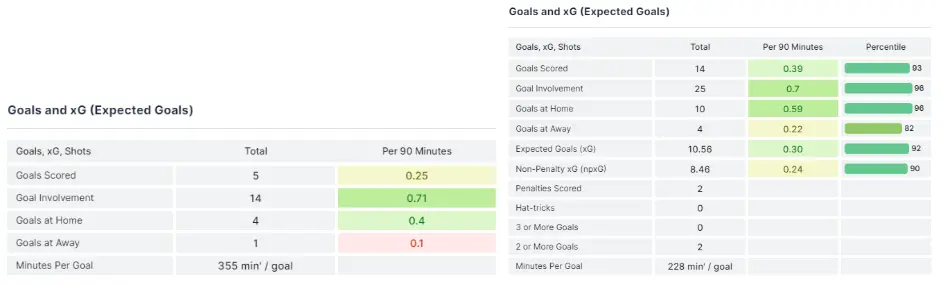
The above screenshots from Footystats.org are showing the playing statistics of Kelly (the left) and Saka (the right) for the 23/23 season from their respective leagues. You can see straight away, there is more data available on Saka than Kelly, including Expected Goals (xG), a metric, which allows people to evaluate team & player performance and measure the quality of chances created and conceded. This is even starker when you compare their Assists, Passing, & Chance Creation Stats as you can see below:
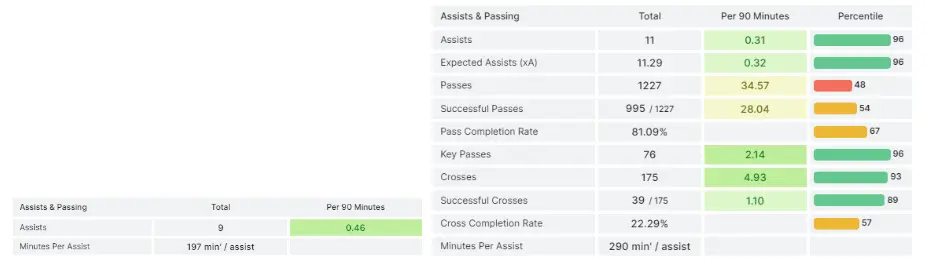
There are merely 2 statistical types for Kelly (L) vs a mammoth 10 different statistics for Saka with only assists and Minutes per Assist comparable. So why is having more data in women’s sport important? It will keep raising the profile of women's sports, generate more interest and will help teams and players develop making the game more competitive and more entertaining for us fans.
So why is there less data currently? I feel this is down to a few reasons:
1. The availability of data
The premiership was formed in 1992, so it has over 30 years' worth of data and collection methods while the Women's Super League was formed in 2011 and only became fully professional in 2018. With it only going fully professional 6 years ago, clubs and media outlets have only started investing in this area in the last few years. The recent broadcast deal between the FA, Sky Sports and the BBC will certainly help push this agenda further as pundits and commentators will need access to more data during games. This leads to the 2nd point.
2. Media Coverage
While the above Sky Sports and BBC deal is worth around £8m per season, that is still a drop in the ocean compared to the premier league broadcast rights.
The huge success of the Lionesses in the summer of 2022 averaged 11 million viewers, with a peak of 17.4 million tuning in, This was the highest figure ever recorded for women’s football in Britain at the time and this will help towards a greater media coverage going forward with more people wanting to watch women's sports. This in turn will help support the drive for more detailed and varied statistics.
But it’s not just football, the Women’s Rugby World Cup final in November 2022 attracted a peak audience on ITV of 1.82 million, which was the largest UK audience for a Red Roses game since 2017’s World Cup final.
3. Investment
It goes without saying that women's sport needs more investment. Not just financial investment but better access to training facilities, coaches, media opportunities, and data and statistics. It would be interesting to see what the differences are between the data departments of elite-level sports teams on the men’s vs. women’s teams.
As the long overdue rise of women's sports globally has started on its journey, let's see what happens in the field of data. Hopefully, there will be a wealth of data to look at for Chloe Kelly in the future.
If you are interested in data in sports and you have 2 hours spare, the film Moneyball, starring Brad Pitt and Jonah Hill, is an excellent watch. It’s based on the book of the same name, which I’ve not read, and covers the use of data and statistics in baseball.
Craig Brown is a Data Literacy/ Data & Insights for Business Decisions apprentice based in the UK and is writing for the Apprentice Lens as part of the Blogging Team. Here's more about him:
"Craig is an Education Partnership Officer for Lancashire County Council and leads on Team around the School and Settings for one of the 5 localities. Craig hopes to develop his writing skills and talk about his apprentice journey as someone who did not enjoy school."