

When PowerPoint Took Over the World | by Andrea Hall
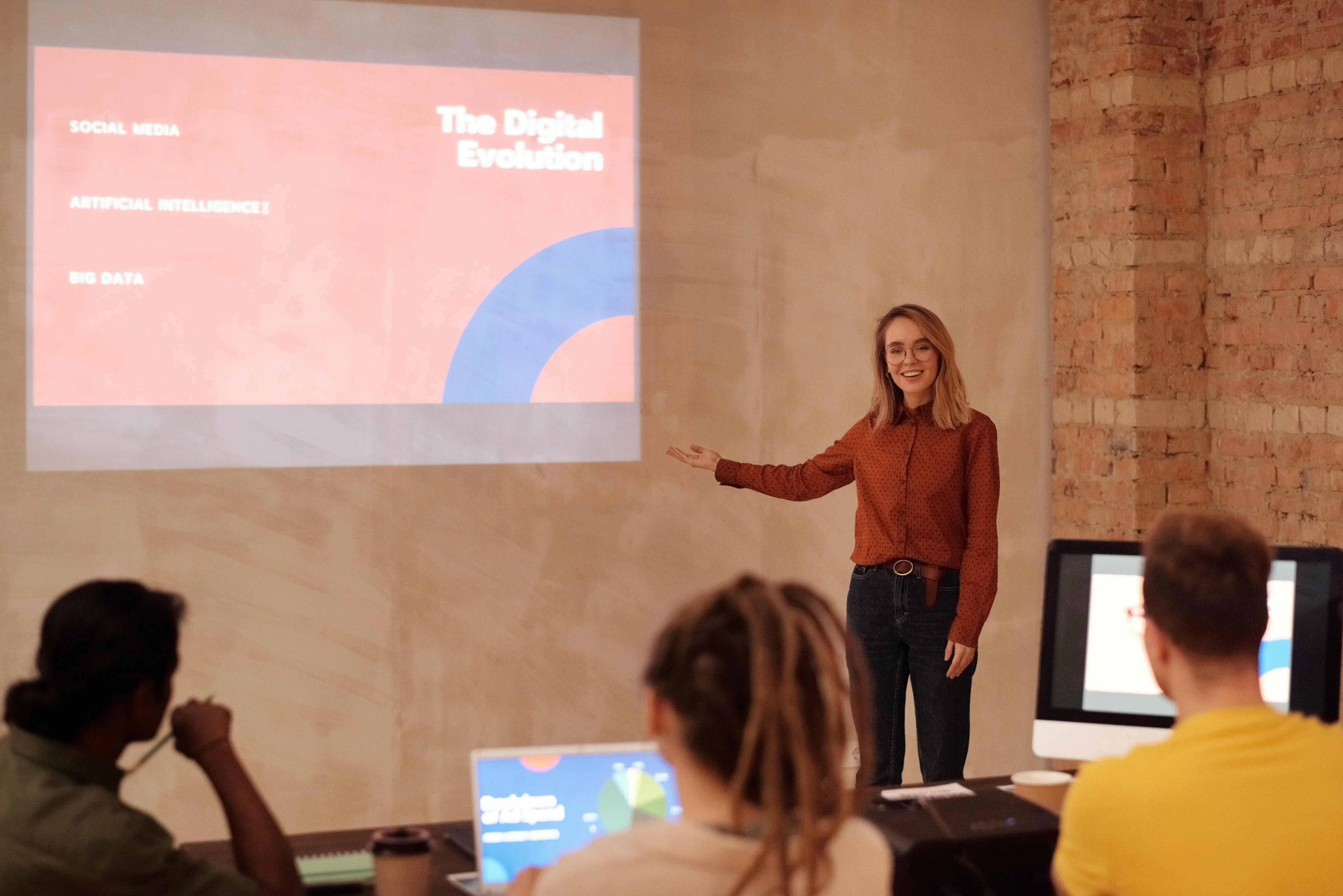
Is anybody else happy to embrace the freedom and creativity that Powerpoint as a communication tool provides? Powerpoint used to be merely a presenting tool - a limited number of slides containing key information to support the speaker’s words. Powerpoint was supposed to be there to support the presenter, not to lead. A presenter was judged on their preparation for the session, and knowledge of a subject depending on whether they read verbatim from the screen, or hardly referred to it, pausing only to move to the next slide. Strategies were lengthy Word documents, pages numbering 30, 60, or even more. Now arguably they are presented as flashy slide decks where design, it can be said, may sometimes take priority over content. It seems Word, or written strategies are almost obsolete.
Eyebrows are now raised if someone doesn’t refer to it as a ‘slide deck’, or asks what is a slide deck, but just when did the memo go out that everything needed to be on Powerpoint? I remember it sneaking in during 2012 when I was asked to put together a proposal and a strategy using one, but then on my next contract, it seemed Word was still the preference. Which way to go? Should I showcase this new way of presenting a proposal, or work within the norms still in place?
When did the shift happen? Where did the movement come from? Why is my blog not on a slide deck? I have a feeling it may have come from changes in the way students learnt and presented their projects in school, college, and university. As those students have moved into the workplace, this way of communicating may have come with them, and as they moved on up into senior positions, the use of PowerPoint has evolved as a norm across the industry. This is my theory but I could be completely wrong.
Where does it go from here? What is the next phase in workplace and industry communications? On a recent Multiverse event, the facilitator used Amazon as a case study on how they had significantly reduced time in meetings, and increased productivity in those meetings by removing Powerpoint altogether, and shared information ahead of the meeting, so only relevant discussions occurred within these meetings, as this “passive observation of a PowerPoint presentation” was removed.
Do I use slide decks and PowerPoint as my primary communication of strategies and processes etc? Oh yes, I’ve embraced it, and will admit, not having to write lengthy and overly verbose strategies is both liberating and time-saving. Quite what that shift means in terms of person specifications asking for excellent communication skills, I’m not sure, but for now, I’ll stick with this more visual means of communication, until the next one comes along. Who knows, it may have already arrived and I just haven’t realised it yet. If you know already, feel free to share.
Andrea Hall is a Business Transformation Fellowship apprentice at Multiverse based in London, UK. She is writing for the Apprentice Lens as part of the Blogging Team. Here’s more about her:
“Andrea has worked as a project manager in the public, private and third sectors for over 20 years, recently taking on a new role moving over into supply chain management.
Andrea is looking forward to sharing her knowledge, skills, and experience from working as a contractor on many varied projects as well as from this new, permanent role, and from the opportunities to learn provided by her time on the Business Transformation Fellowship apprenticeship.”